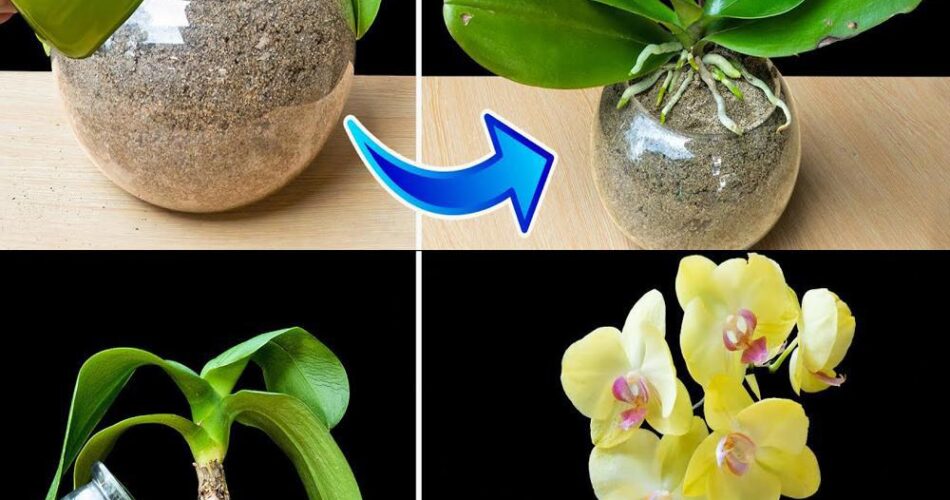
Cultivating orchids on the sand: surprisingly fast growth and a profusion of flowers
Orchids are among the most beautiful and fascinating plants on the planet. Their diversity, elegance and exotic flowers make them botanical treasures coveted by many gardening enthusiasts. If you are looking to experiment with an innovative cultivation method, growing orchids on sand can be a surprising but very effective option. This approach can offer surprisingly rapid growth and a profusion of flowers, provided you follow a few key steps and provide appropriate care to your plants.
Choosing the right orchid varieties
Not all orchid varieties are suitable for cultivation on sand. It is therefore essential to choose orchids that prefer specific growing conditions. Orchids of the genus Cymbidium, Dendrobium and Epidendrum are known to thrive well in a sandy substrate. Be sure to select species that are naturally adapted to dry conditions and are able to store the moisture needed for their growth.
Prepare the culture substrate
Before planting your orchids, you must prepare a suitable substrate to promote their development. Mix fine sand with peat and perlite to create a well drained and aerated growth medium. Make sure the substrate retains just what it takes to keep moisture from rotting orchid roots. You can also add some crushed pine bark to bring extra nutrients to your plants.
Orchid planting
When your substrate is ready, gently plant your orchids while not damaging fragile roots. Position the plants so that their roots are well embedded in the substrate while leaving enough space for their future growth. Avoid over compacting the substrate around the roots to ensure proper aeration of the root system.
- Regular watering
Orchids grown on sand require regular but moderate watering. Spray lukewarm water on the substrate as soon as you notice that the top layer begins to dry. Make sure the water flows easily through the substrate to avoid any congestion. Non-calcareous water is recommended to prevent the accumulation of mineral salts harmful to orchids.
- Exposure to light
Orchids are plants that need a lot of light to thrive. Place your cultivated orchids on the sand in a well-lit area protected from direct sunlight. Exposure to indirect light for about 6-8 hours per day is ideal for vigorous growth and abundant flowering.
Periodic fertilization
In addition to watering water, it is recommended to fertilize your orchids on the sand periodically to provide them with essential nutrients for their growth. Use a specific fertilizer for diluted orchids in watering water and apply it sparingly every 2-3 weeks during the active growth period. Avoid overnourishing your plants to avoid any risk of root burning.
Surveillance of pests and diseases
Orchids are susceptible to pest attacks and fungal diseases. Monitor regularly the appearance of cochenilles, aphids or mushrooms on the leaves and stems of your plants. If pests occur, use natural insecticide solutions or insecticide soaps to gently remove them. In case of fungal diseases, reduce watering and treat orchids with suitable fungicides.
Flowering and specific care
Once your orchids grown on sand have reached the flowering period, provide them with specific care to maximize the beauty and longevity of their flowers. Avoid moving your plants abruptly so as not to disrupt the flowering process. Cut the stems of wilted flowers to encourage new blooms and gently remove dried flowers to prevent the spread of disease.
By following these practical tips and providing good care to your orchids, you will be able to enjoy surprisingly fast growth and a profusion of flowers throughout the year. Experience this original method of cultivation and be amazed by the incomparable beauty of your orchids grown on the sand.