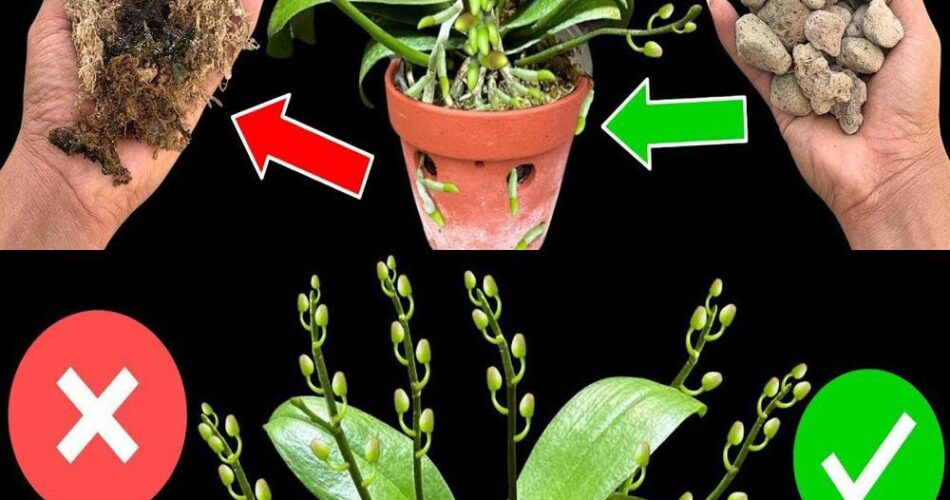
Remove immediately! Replace this and orchids will bloom magically
Orchids are beautiful and delicate plants that can bring an elegant touch to any room. However, for them to flourish and prosper, it is essential to ensure that they receive the right care. In this article we will discuss a crucial step for the successful flowering of orchids: the substitution of the substrate.
Why is it important to replace the orchid substrate?
The substrate is the medium in which orchid roots develop. Over time, the substrate can decompose, compact or hold too much moisture, which can cause problems for the plant. By replacing the substrate regularly, you ensure a healthy environment for orchid roots, which promotes vigorous growth and abundant flowering.
When should orchid substrate be replaced?
Ideally, you should replace the substrate of your orchids every 1-2 years. However, it is important to monitor the state of the substrate to know when it is time to change it. Here are some signs that your orchid substrate should be replaced:
- The substrate is decomposed or compacted.
- Orchid roots grow outside the pot.
- The plant does not appear to develop properly or produces fewer flowers.
How to replace orchid substrate?
Here is a step-by-step guide to replacing your orchid substrate:
- Choose a substrate suitable for orchids, such as a mixture of pine bark, charcoal and perlite.
- Gently remove the orchid from its pot by gently holding the plant through the base.
- Shake old substrates and roots gently to remove debris.
- Inspect the roots to remove any damaged or rotten parts.
- Place the plant in a new pot filled with the new substrate, ensuring that the roots are evenly distributed.
- Water the plant slightly to allow the new substrate to settle down.
- Replace the orchid in a bright but indirect place, avoiding the full sun.
Additional tips for healthy orchids
In addition to regularly replacing the substrate, here are some additional tips to take care of your orchids:
- Water your orchids only when the substrate is dry to touch.
- Place orchids in a bright place but without direct sun, with adequate ventilation.
- Fertilize orchids with a specialized orchid fertilizer once a month during the growing period.
- Monitor pests and diseases and treat them quickly if necessary.
With the appropriate care, your orchids will reward you with a spectacular and magical bloom. Remember that each plant is different, so carefully observe the specific needs of your orchids and adjust your care accordingly. By following these tips, you can enjoy the beauty of your flowering orchids for many seasons to come.
- https://www.orchidees-de-france.fr/
- https://www.jardinsolidarites.org/