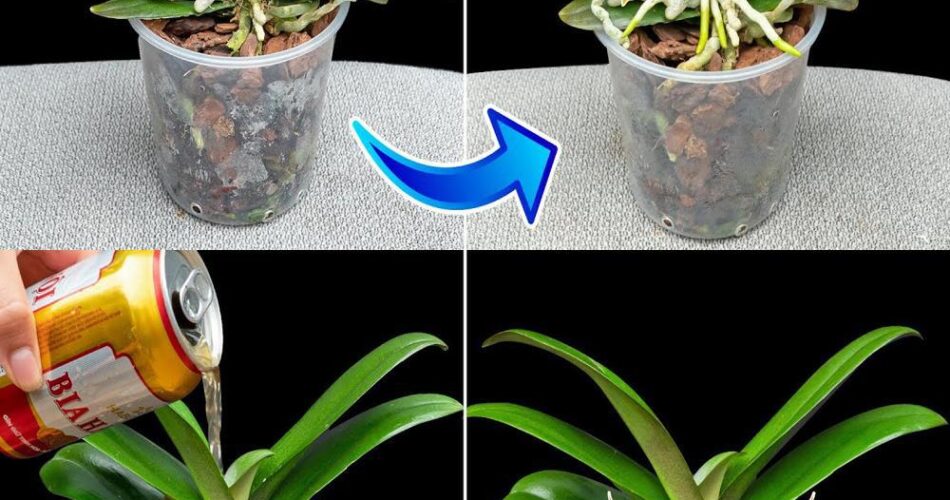
Do it with your orchid! It will bloom like never before
Orchids are beautiful plants that bring a touch of elegance to any house or office. Their unique beauty and delicate flowers make them very popular with many gardeners. However, for your orchid to flower abundantly and stay healthy, it is important to take care of it properly. Here are some practical tips to help you grow your orchid and see it bloom as never before.
Choose the right location
- Place your orchid in a bright place, but avoid direct exposure to the sun, especially in summer.
- Orchids enjoy indirect brightness, such as that found near a window facing east or west.
- Make sure the room temperature is ideal for your orchid. In general, a temperature between 18 and 24 degrees Celsius is suitable for most orchid varieties.
Regular watering
Watering is a crucial step for the proper development of your orchid. Here are some tips for successful watering your plant:
- Once a week, plunge the pot of your orchid into warm water for a few minutes, then let it drain well before placing it back in its pot cache.
- Avoid leaving stagnant water in the bottom of the pot cache, as this could cause rotting of orchid roots.
- In winter, reduce the frequency of waterings to allow the plant to pause for growth.
Regular fertilization
To promote the flowering of your orchid, it is recommended to bring it a suitable fertilizer. Here are some tips for effective fertilization:
- Use a specific fertilizer for orchids, rich in nitrogen, phosphorus and potassium, which you will dilute in water water once a month.
- Avoid overdose of fertilizer, as this could burn orchid roots.
- Stop fertilizing your orchid during its rest period, usually in winter.
Size and potting
To keep your orchid healthy and to promote its flowering, it is advisable to cut the faded floral stems and repot the plant regularly. Here is how to proceed:
- After flowering, cut the floral stems at the base to encourage the production of new flowers.
- Regularly inspect the roots of your orchid and repot it in a slightly larger pot every two to three years.
- Use a suitable substrate for orchids, such as pine bark or sphagnum, to allow good root drainage.
Monitoring diseases and pests
Orchids are susceptible to disease and pest attacks, so it is important to monitor their health regularly. Here are some signs to watch:
- Yellow or wilted leaves may indicate excessive watering or lack of light.
- Spots on leaves may be a sign of fungal infection, in which case it is recommended to remove contaminated parts.
- Shellfish or aphids can attack orchids, in which case it is advisable to use a mild insecticide to remove them.
By following these tips and taking care of your orchid carefully, you can see it bloom beautifully and enjoy its beauty for many years. Don’t forget to give her all the love and care she needs to flourish in your home!