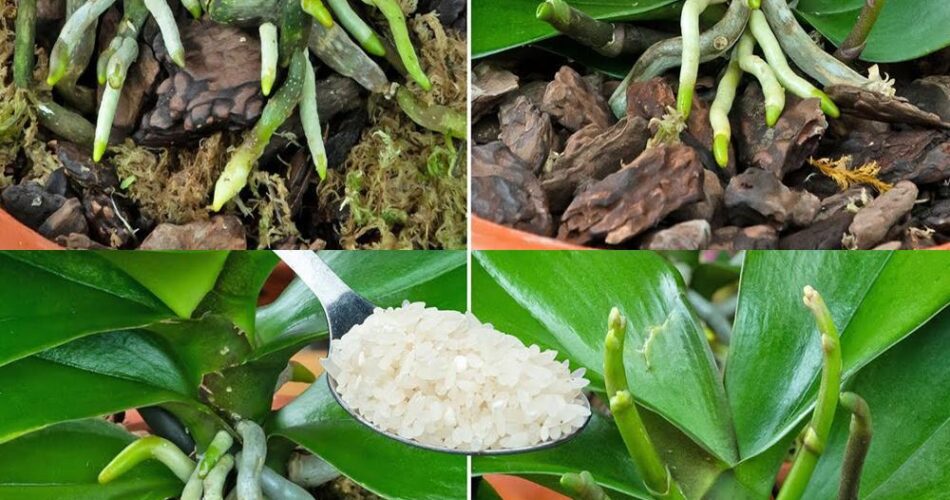
Feed this if the orchid does not bloom! Orchids will grow in many branches
Orchids are exotic and elegant plants that bring a touch of beauty and grace to any space. However, it can be frustrating for a gardening enthusiast to find that his orchid does not bloom despite his attentive cares. Fortunately, there are ways to stimulate the flowering of these beautiful plants and encourage them to produce many flowers.
Optimal conditions for orchid flowering
Orchids need specific conditions to grow well and bloom. Key considerations include:
- Light: Orchids need bright but indirect light. Place them near a window facing east or west to give them the right amount of light.
- Temperature: Orchids thrive in temperatures between 18°C and 25°C during the day, and between 12°C and 18°C at night. Be sure to maintain these conditions to promote flowering.
- Watering: Orchids do not like to be watered too much. It is recommended to water orchids once a week and then allow them to dry well between waterings.
- Humidity: Orchids need a relative humidity of between 50% and 70%. You can increase moisture by placing a water container near the orchids.
Orchid feeding to stimulate flowering
If your orchid refuses to bloom despite optimal conditions, it may lack essential nutrients. You can help your plant by providing it with a balanced and enriched diet. This can be achieved by:
- Fertilizers: Choose a fertilizer specially formulated for orchids, rich in nitrogen, phosphorus and potassium. Apply the diluted fertilizer once a month during the active growth period of the orchid.
- Nutrient: In addition to fertilizer, orchids can benefit from essential nutrients such as calcium, magnesium and sulphur. Make sure your fertilizer contains these elements for healthy growth.
Stimulation of growth in multiple branches
If you want to encourage your orchid to produce many branches and become a lush plant, there are techniques that you can apply:
- Size: Cut the faded floral stems to encourage the growth of new stems. Use clean and disinfected tools to prevent infection.
- Division: If your orchid has become too large, you can divide it into several plants to promote growth into multiple branches. Make sure each division has healthy roots before replanting.
- Careful care: Give your orchid regular attention by monitoring its condition, providing optimal conditions and feeding it properly. Regular attention will help foster healthy and vigorous growth.
With these tips and techniques, you can help your orchid flower abundantly and grow into a beautiful plant with many branches. Remember that patience and consistency are essential to see the desired results. By taking care of your orchid and providing it with the appropriate care, you can enjoy its beauty for many years to come.