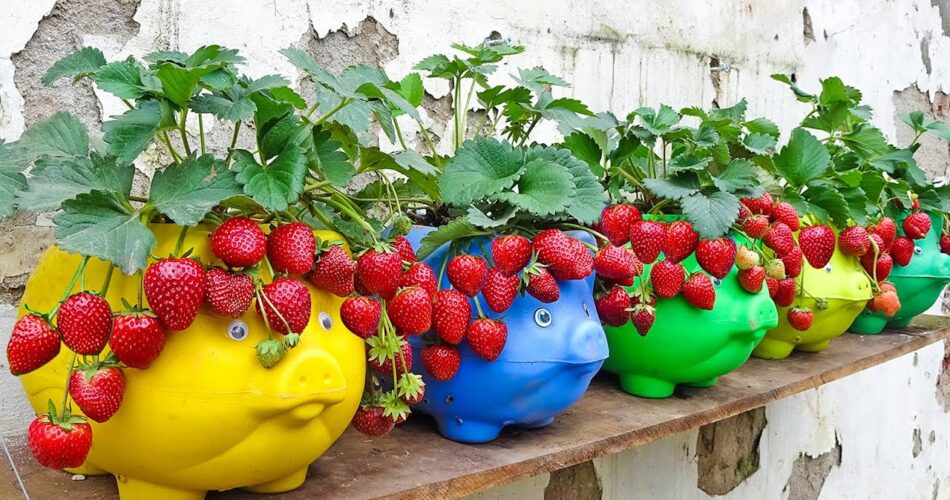
Growing strawberries on the terrace is a delightful and space-efficient way to enjoy fresh, homegrown berries. Here are some great tips to make the process easy and ensure a bountiful harvest of strawberries:
Materials Needed:
- Containers or Hanging Baskets:
- Choose containers or hanging baskets with good drainage. Hanging baskets save space and add an aesthetic touch.
- Strawberry Plants or Runners:
- Purchase healthy strawberry plants from a nursery or use runners from existing strawberry plants.
- Potting Mix:
- Select a well-draining potting mix suitable for strawberries. Consider mixing in some compost for added nutrients.
- Watering Can or Drip Irrigation:
- Ensure easy access to water for consistent moisture. Drip irrigation systems work well for terrace gardening.
- Mulch:
- Use straw or shredded leaves as mulch to retain soil moisture, suppress weeds, and keep the berries clean.
- Fertilizer:
- Choose a balanced, slow-release fertilizer or use a liquid fertilizer suitable for strawberries.
Steps:
- Select the Right Varieties:
- Choose strawberry varieties suited for container gardening, such as everbearing or day-neutral types. These varieties tend to produce berries continuously.
- Choose the Right Containers:
- Opt for containers with drainage holes to prevent waterlogging. Hanging baskets save space and allow for vertical gardening.
- Planting:
- Plant strawberries in early spring or late summer. Ensure the crown (where the roots meet the stems) is at soil level. Space the plants according to the variety.
- Soil Preparation:
- Use a well-draining potting mix enriched with compost. Good drainage is crucial to prevent root rot.
- Watering:
- Keep the soil consistently moist, especially during flowering and fruiting. Avoid waterlogging, as strawberries are susceptible to root diseases.
- Sunlight:
- Place the containers in a location that receives at least 6-8 hours of sunlight per day. Full sun is essential for healthy berry production.
- Mulching:
- Apply a layer of mulch around the strawberry plants to retain moisture, regulate soil temperature, and reduce weed growth.
- Fertilization:
- Feed the strawberries with a balanced fertilizer according to package instructions. Avoid excessive nitrogen, as it can lead to lush foliage but fewer fruits.
- Runners (Optional):
- Allow or encourage the development of runners. Runners can be rooted to create new strawberry plants, expanding your terrace garden.
- Pest and Disease Management:
- Monitor for pests like aphids and diseases like powdery mildew. Treat promptly with organic solutions to avoid chemical residues on the fruit.
- Harvesting:
- Harvest ripe strawberries by picking them gently. Ripe strawberries are fully red, and they should easily detach from the stem.
Tips:
- Vertical Gardening: If using hanging baskets, consider arranging them in a tiered or vertical manner to maximize space.
- Regular Pruning: Trim off runners and older leaves to encourage better air circulation and maintain plant vigor.
- Overwintering: Protect strawberry plants during winter by bringing containers indoors or providing insulation.
- Quality Potting Mix: Invest in a high-quality potting mix to provide the necessary nutrients for healthy strawberry plants.
By following these tips, you can create a productive strawberry garden on your terrace, ensuring a steady supply of fresh and delicious berries. Enjoy the sweet rewards of your efforts in a space-saving and enjoyable way.