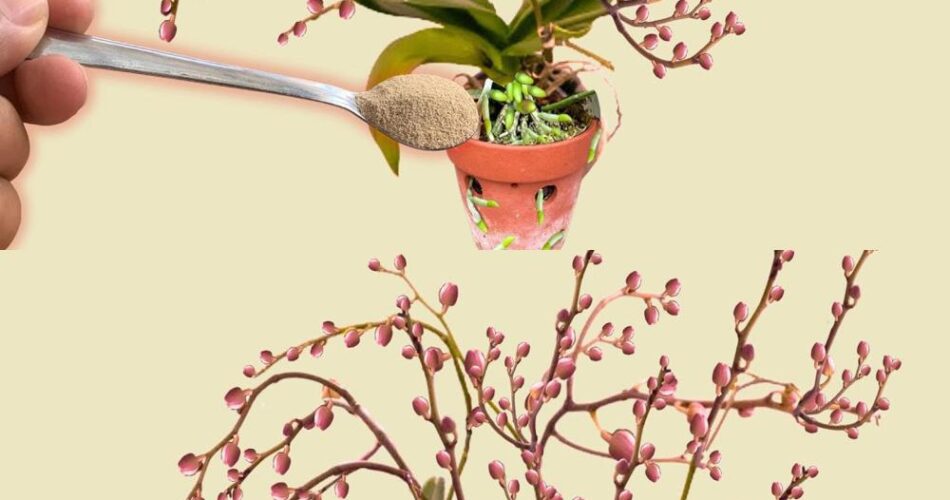
Orchids that never bloom suddenly flourish all year round thanks to this
Orchids are exotic plants that are fascinating and prized for their exquisite beauty. However, it can be frustrating for gardeners to see that their orchids never bloom despite all their efforts. Fortunately, there are methods and tricks to encourage these plants to flourish throughout the year. Let’s discover together the steps to follow to make your orchids bloom that never bloom.
1. Adequate light
Orchids need light to produce flowers. Place your orchids in a bright place, but avoid direct exposure to the sun. Filtered or sieved light is ideal for these delicate plants. If your orchids don’t get enough light, use culture lamps to compensate.
2. Temperature and humidity
Orchids thrive under specific temperature and humidity conditions. Make sure the temperature of your growing space is between 18 and 24 degrees Celsius during the day and slightly cooler at night. In addition, maintain a relative humidity of about 60-80% by spraying orchids regularly.
3. Watering and drainage
Excessive or insufficient watering can affect the flowering of orchids. Allow the substrate to dry slightly between each watering to avoid root rot. Use rainwater or demineralized water to avoid the accumulation of mineral salts. Make sure the pots have drainage holes to evacuate excess water.
4. Regular fertilization
Orchids need nutrients to produce flowers. Use a specially formulated fertilizer for orchids and dilute it to half its recommended concentration. Fertilize your orchids once a month during the active growing period to promote abundant flowering.
5. Rest period
Orchids need rest periods to rebuild their strength and prepare for flowering. Reduce watering and stop fertilization during the rest period, usually in autumn. This simulator rest period must be respected to allow your orchids to bloom later in the year.
6. Surveillance of pests and diseases
Orchids are sensitive to pests and diseases that may hinder their ability to bloom. Regularly inspect your plants for signs of damage caused by insects or fungi. Treat problems quickly to avoid any deterioration of your orchids’ health.
7. Division and repotting
Division of mature orchids and repotting of established plants can encourage flowering. When dividing an orchid, make sure that each division has healthy roots and growth shoots. Choose a pot slightly larger than the previous one with a fresh and well draining substrate to promote abundant flowering.
Conclusion
With proper care and good growing conditions, your orchids that never bloom can suddenly flourish all year round. By following these tips and being attentive to the needs of your plants, you can enjoy beautiful orchid flowers that will brighten your living space. Take the time to observe and interact with your orchids to create an environment conducive to their continued development.