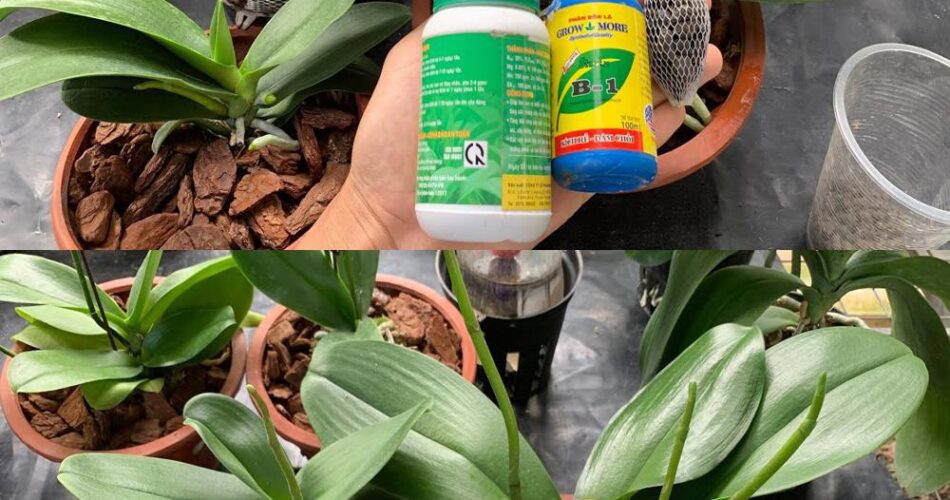
Take Care and Fertilize Orchids in Button
Orchids are beautiful and delicate plants that require specific care to thrive and bloom. When your orchids are buttoned, it is essential to provide them with the necessary nutrients and attention to promote an abundant and long-lasting flowering. Here are some practical tips to take care of and fertilize your orchids as a button:
Choose the right fertilizer
Orchids have specific nutritional needs, which means that it is important to use a suitable fertilizer. Choose a fertilizer specially formulated for orchids, preferably a balanced fertilizer with high levels of phosphorus (P) and potassium (K) to promote flowering. Avoid nitrogen (N)-rich fertilizers as they can promote leaf growth at the expense of flowers.
Fertilization frequency
It is recommended to fertilize your orchids as a button once a month during the growing season, usually from spring to autumn. Reduce the frequency once every two months during the winter rest period. Make sure to dilute the fertilizer at half the recommended concentration to avoid burning sensitive orchid roots.
Application of fertilizer
- First water your orchids with pure water to avoid excessive accumulation of salts.
- Mix the fertilizer with water according to the packing instructions.
- Apply the fertilizer directly to the substrate without touching leaves or stems to avoid burns.
- Avoid fertilizing orchids during times of stress, such as when freshly repotted or exposed to extreme temperatures.
Monitor the reaction of your orchids
Watch carefully the reaction of your orchids to fertilizer. If you notice yellowing leaves, brown roots or excessive aerial root growth, it is time to adjust your fertilization routine. It is better to underfertilize than overfertilize your orchids, as excessive salt build-up can damage roots and leaves.
Other Orchid Care Button
In addition to fertilization, here are some other tips to take care of your orchids in button:
- Place your orchids in a bright place but in direct sunlight to avoid burns.
- Maintain a relative humidity of about 50-70% by placing a water tray under the pots or using a humidifier.
- Regularly check the condition of the substrate and water only when dry to the touch.
- Monitor signs of diseases or pests such as spots on leaves, rotten roots or the presence of insects.
By following these basic tips and providing your orchids with the appropriate care, you can enjoy beautiful blooms throughout the year. Take the time to observe and understand the specific needs of your orchids to ensure their health and vitality.